
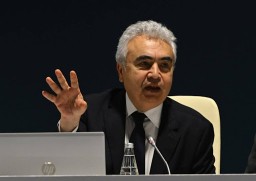
Fatih Birol, the head of the International Energy Agency, has called on the global insurance and finance industries to play an active and constructive role in supporting energy supply restoration efforts in the wake of the devastating Iran war. Speaking in Canberra, the IEA chief said the scale of infrastructure damage across the Gulf — with at least 40 major energy assets severely affected — would require enormous insurance payouts and reconstruction financing to restore productive capacity. He described the overall crisis as equivalent to the combined force of the 1970s twin oil shocks and the Ukraine gas emergency.
Birol said that insurance companies with exposure to damaged Gulf energy assets needed to process and pay claims quickly to enable the rapid mobilization of reconstruction resources. Financial institutions needed to make reconstruction financing available at fair terms and with appropriate urgency. He said delays in insurance settlements and financing decisions would directly translate into delays in supply recovery, with real economic consequences for the entire world.
The conflict began February 28 with US and Israeli strikes on Iran and has since removed 11 million barrels of oil per day and 140 billion cubic metres of gas from world markets. The Hormuz strait remains closed to commercial shipping, and the IEA deployed 400 million barrels from strategic reserves on March 11 in its largest ever emergency action. Birol confirmed further releases were under consideration.
He called for demand-side policies including remote work, lower speed limits, and reduced air travel. He met with Australian Prime Minister Anthony Albanese and said the financial dimensions of the crisis demanded as much attention as the physical supply dimensions. He said governments needed to work with financial and insurance institutions to ensure that reconstruction financing was available as quickly as possible once the security situation allowed work to begin.
Trump’s 48-hour ultimatum to Iran to reopen the strait expired without result, and Tehran threatened retaliatory strikes on US and allied energy and water infrastructure. Birol concluded by calling on the global financial community to treat energy supply restoration as a priority investment. He said the economic case for rapid reconstruction financing was overwhelming — every day of delayed supply restoration was a day of continued economic damage to the entire world economy.