
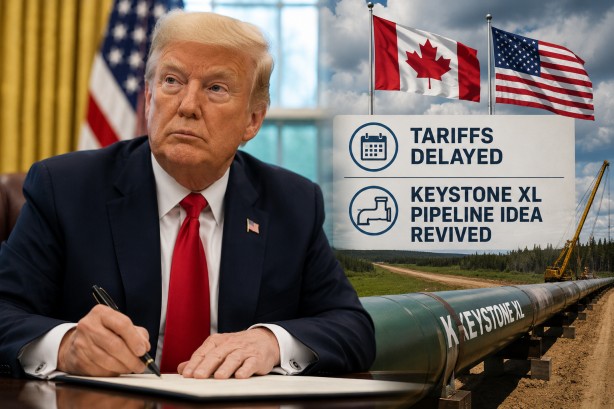
The United States has postponed the implementation of a significant tariff on Canadian imports, originally set at 50%, by three days. President Donald Trump attributed this delay to positive strides towards a new trade agreement with Canada. Both Trump and Canadian Prime Minister Mark Carney have acknowledged advancements, with Carney noting that while substantial progress has been made, further negotiations are necessary to finalize the agreement.
The proposed tariffs, which would impact billions of dollars worth of Canadian goods such as wine and hockey equipment, had raised significant concern. This temporary reprieve is intended to give both nations the needed time to finalize the details of their trade discussions. The delay in imposing tariffs underscores the importance of these negotiations, as the two countries aim to avoid any detrimental effects on their economies.
Additionally, Trump hinted at the possibility of reviving the Keystone XL oil pipeline project, suggesting it might be “awoken from the grave.” However, he did not clarify how this contentious project might relate to the ongoing trade talks. The Keystone XL pipeline, which was planned to transport oil from Canada to U.S. refineries, faced significant opposition and was halted in 2021 after a crucial U.S. permit was revoked. Environmental groups, landowners, and Indigenous communities had long opposed the pipeline, citing environmental and land concerns.
The backdrop to these developments is a period of tense U.S.-Canada relations, characterized by frequent tariff threats and reciprocal trade measures. Despite these tensions, the two neighbors maintain a robust trade relationship, with hundreds of billions of dollars in goods and services exchanged annually. Canadian businesses have expressed anxiety over the potential tariffs, fearing increased costs and restricted access to the U.S. market, which could have ripple effects on both economies.