
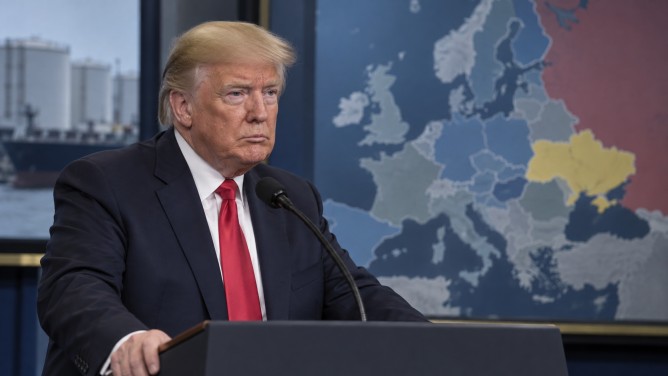
In a move that has ignited controversy, US President Donald Trump has announced a deal with Russian President Vladimir Putin to supply significant quantities of Russian diesel to international markets. The agreement, which involves Russia initially providing over 300,000 tonnes of diesel, has drawn sharp criticism from Ukrainian President Volodymyr Zelenskyy, US lawmakers, and European allies. Trump has justified the deal by stating that it would help reduce fuel prices in the United States and other markets, offering relief to sectors such as agriculture and transportation.
This announcement comes at a time when global energy supplies have been disrupted due to conflicts involving Iran and the closure of the Strait of Hormuz, leading to increased fuel costs that have burdened American consumers and businesses. However, Zelenskyy has condemned the agreement, arguing that it could bolster Moscow’s resources to continue its military actions against Ukraine. He cautioned that the deal could undermine collective international efforts aimed at pressuring Russia to cease its aggression.
The Ukrainian leader also expressed concern that the agreement might overshadow ongoing diplomatic discussions between Ukrainian, American, and European officials, potentially complicating efforts to reach a peaceful resolution to the conflict. By facilitating Russia’s energy exports, Zelenskyy warned, the US risks extending the war rather than promoting peace.
Within the United States, the deal has sparked a bipartisan backlash. Democratic leaders have pointed out that purchasing Russian fuel could contradict recent sanctions intended to limit Moscow’s energy revenue. Some Republican lawmakers have shared these concerns, suggesting that the additional income for Russia could indirectly support its military operations against Ukraine.
The announcement of the diesel deal coincided with meetings between US representatives and Ukrainian and European officials discussing strategies to end the ongoing war. This development could further strain diplomatic relations between Washington and Kyiv, as the US navigates balancing domestic energy cost concerns with its broader geopolitical strategies.
Trump has remained steadfast in defending his decision, highlighting the urgent need to lower energy costs for American consumers. Yet, the implications of the proposed Russian diesel shipments continue to raise complex questions about the United States’ ability to manage its domestic fuel prices while simultaneously addressing its policy stance towards Russia and the conflict in Ukraine.