
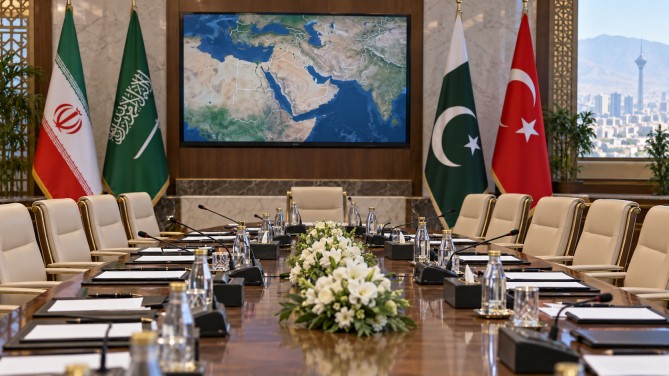
Amid escalating tensions across the Middle East, Iran is preparing to host critical regional security discussions in Tehran. The talks will include senior officials from Saudi Arabia, Pakistan, and Turkey, representing a concerted diplomatic effort to address and mitigate ongoing conflicts in the region. This meeting underscores the urgency of finding diplomatic solutions to issues that threaten stability and security.
The gathering will see the participation of key figures such as Saudi Defence Minister Khalid bin Salman, Pakistan’s army chief General Asim Munir, and Turkish intelligence chief Ibrahim Kalin, along with Iranian security officials. Their discussions are set to focus on regional stability, de-escalation, and the pursuit of diplomatic paths to resolve persistent crises.
Saudi officials view this visit as part of a broader initiative to foster dialogue among nations affected by regional conflicts. These talks aim to bolster mediation efforts led by Qatar and Pakistan, providing a platform for collaborative conflict resolution. This comes against a backdrop of continuing tensions involving Iran, the United States, and Israel, with particular concern over security issues in the strategically vital Strait of Hormuz, a major conduit for global oil and liquefied natural gas shipments.
Further complicating the regional landscape is the ongoing conflict in Yemen, where the Iran-backed Houthi movement continues to launch attacks on Saudi Arabia. The Saudi-led coalition has responded by targeting Houthi missile launchers and storage facilities, hoping to diminish the group’s military capabilities. Saudi authorities have also intercepted ballistic missiles aimed at Riyadh, with the Houthis claiming responsibility for attacks on the Saudi capital’s international airport and oil infrastructure.
In response to these threats, Saudi Arabia has been bolstering its air defenses, with Greece agreeing to maintain its Patriot missile defense system in the kingdom. This reflects the heightened security concerns that underline the necessity of the Tehran talks, which aim to explore strategies for conflict containment, enhanced security cooperation, and prevention of further escalation.
While the outcome of the Tehran meeting remains uncertain, it represents a critical opportunity for regional powers to engage in constructive dialogue that could pave the way for peace and stability in the Middle East. The success of these discussions will largely depend on whether the involved parties can agree on concrete measures to address the numerous disputes and security challenges facing the region.