
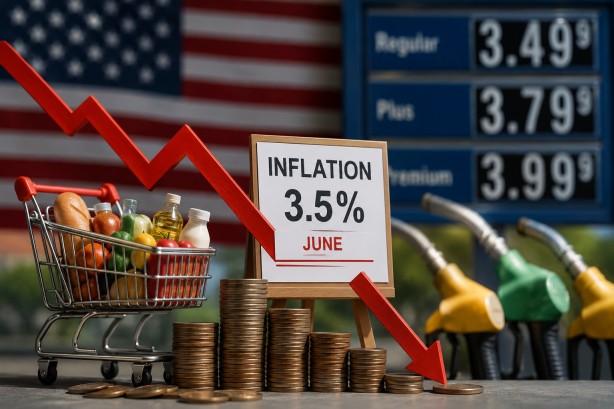
In June, annual inflation in the United States decelerated to 3.5%, largely due to a temporary dip in energy prices that helped bring down overall consumer costs. The latest figures from the Consumer Price Index (CPI) indicate that inflation has eased after rising in previous months. A significant drop in prices by 0.8% from May’s levels was mainly driven by a decrease in gasoline and fuel costs, which helped to counterbalance price hikes in areas such as food, housing, and utilities.
Core inflation, which strips out the more unpredictable food and energy prices and is closely scrutinized by the Federal Reserve, saw a slight decline, reaching 2.6% annually. Despite this cooling off, the reduction in inflation may not last long. Renewed tensions in the Middle East have caused a surge in global oil prices, which, in turn, are pushing up fuel costs for consumers and increasing operational expenses for sectors like aviation and transportation.
The Federal Reserve is poised to evaluate the newest inflation data in conjunction with labor market conditions during its upcoming policy meeting later this month. Although there has been some moderation in inflation rates, they still exceed the central bank’s long-term target of 2%, creating uncertainty about when any adjustments to interest rates might occur.