
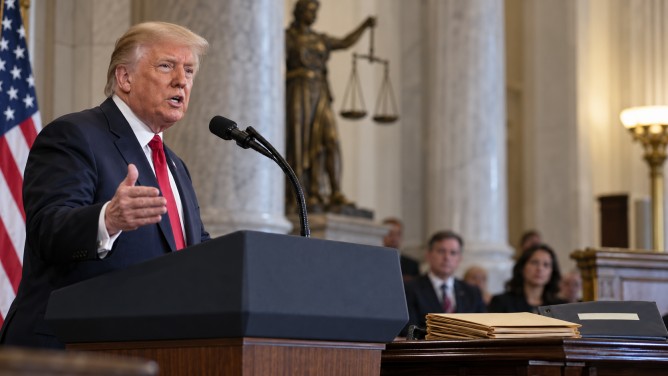
In a recent announcement, US President Donald Trump proposed that he could personally determine financial rewards under a new whistleblower program by the Department of Justice aimed at uncovering government fraud. Standing alongside Vice-President JD Vance, Trump suggested that he could arbitrate disputes when multiple whistleblowers report the same fraudulent activity, pledging to make fair and swift decisions about who should receive compensation.
The Department of Justice’s initiative seeks to incentivize individuals to report fraud involving federal funds, offering rewards of up to $30,000 for information that advances a criminal case to the charging stage. This program is designed to extend beyond the existing False Claims Act, providing opportunities for whistleblowers to report a broader range of frauds and receive rewards earlier in the investigative process.
While Trump has expressed his willingness to take on the role of arbitrator, it is unclear whether he will formally assume this responsibility. The Department of Justice maintains that it holds the exclusive authority to decide on reward allocations under the program. Despite the potential for whistleblowers to receive significant compensation, the Department’s guidelines cap rewards at $30,000.
Vice-President Vance highlighted the program’s aim to encourage more whistleblower activity, complementing the scope of the False Claims Act by covering additional types of fraud. Trump also encouraged journalists to engage in reporting suspected fraud, noting that they could qualify for rewards if allowed by their employers.
The program’s intent is to bolster efforts to detect fraud and hold wrongdoers accountable. Nonetheless, questions persist regarding how disputes over reward eligibility will be resolved and how the program’s payment rules will be enforced.