
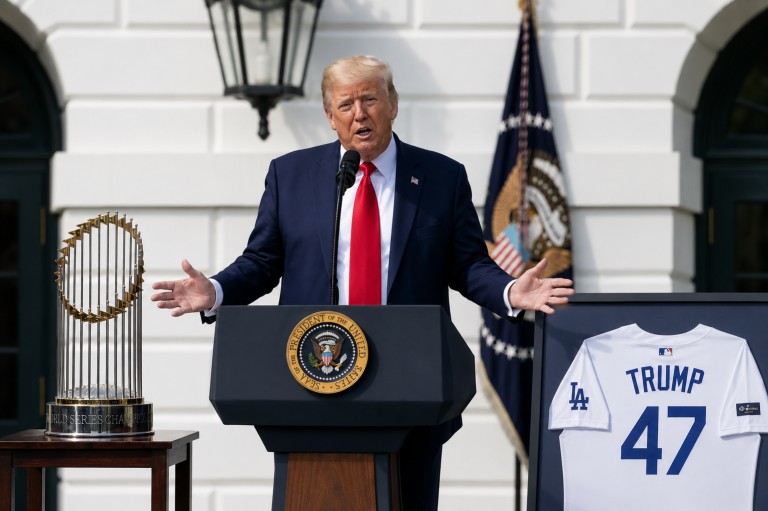
On Thursday, the Los Angeles Dodgers, winners of the 2025 World Series, were honored at the White House by US President Donald Trump, marking their second visit in as many years as champions. The celebrated event in the Rose Garden saw the Dodgers gifting Trump with a personalized team jersey and a replica of the World Series championship ring, as the president lauded their successful season and expressed optimism about their future victories.
The ceremony was attended by several of the Dodgers’ star players, including Shohei Ohtani, Freddie Freeman, Yoshinobu Yamamoto, and team manager Dave Roberts. However, notable absences included Mookie Betts and Kiké Hernández. Trump acknowledged the team’s achievements during his speech, paying tribute to standout performers and sharing anecdotes about legendary baseball figures like Babe Ruth and former New York Yankees owner George Steinbrenner. He made a minor gaffe by referring to veteran pitcher Clayton Kershaw as still active, despite Kershaw’s retirement following last season’s World Series.
While accepting the championship ring, Trump humorously pondered, “Do I have to report this? I don’t want to report this,” before tucking it into his jacket pocket. The White House visit stirred a mix of emotions among Dodgers fans, particularly in light of recent immigration enforcement actions and protests in Los Angeles tied to policies from the Trump administration.
Mookie Betts explained his absence by expressing a desire to spend time with his family, whereas Kiké Hernández, who has been vocal about his opposition to immigration raids in Los Angeles, mentioned his commitment to rehabilitation and stated he would have skipped the event even if he were available. Manager Dave Roberts defended the team’s decision to attend, emphasizing that the visit was intended to honor a long-standing sports tradition rather than delve into political matters.
Visits to the White House by championship-winning teams have long been an American custom, though participation sometimes varies based on individual players’ personal beliefs and political stances. This long-standing tradition continues to play an important role in celebrating athletic achievements, despite occasional controversies and differing perspectives among athletes.