
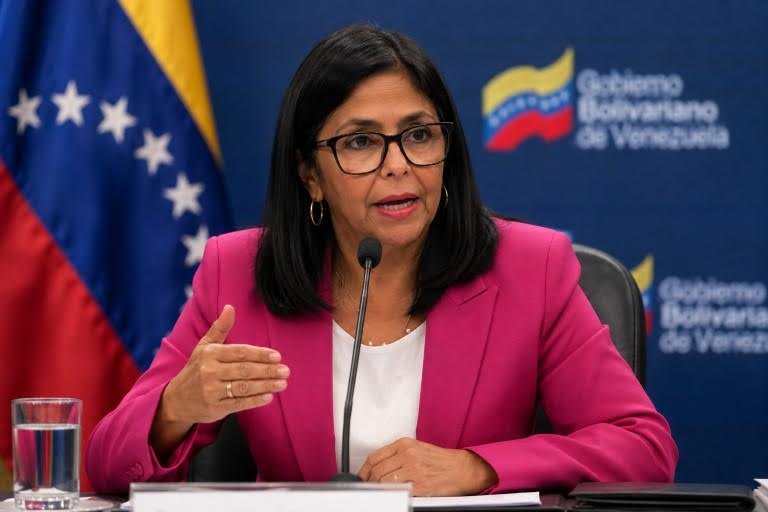
Delcy Rodríguez, Venezuela’s interim president, has staunchly defended a contentious energy deal with the United States, emphasizing the country’s continued ownership and sovereignty over its vast oil reserves. This comes amidst intense domestic criticism following her rise to power earlier this year, after Nicolás Maduro was ousted through a U.S.-backed operation. In a national address, Rodríguez sought to dispel allegations of ceding national resources to Washington, highlighting the agreement’s potential to generate significant economic benefits.
Rodríguez outlined the deal’s potential to bring in over $209 billion in revenue, which she claims could elevate Venezuela to a prominent position as an energy producer. She stressed that the country’s immense underground oil reserves require substantial investment, technology, and infrastructure to be transformed into meaningful economic progress for the Venezuelan people. Reports indicate that the agreement was negotiated discreetly over several months, granting the U.S. control over a significant portion of Venezuela’s oil resources, which are the largest proven reserves globally, even surpassing those in Saudi Arabia and Iran.
The deal involves 17 strategic oilfields with a targeted production capacity of more than 1.5 million barrels per day. However, this announcement has sparked considerable backlash from both opposition figures and members within Rodríguez’s own political circle. Critics have labeled the arrangement as a resource grab, with a former state oil executive condemning it as a betrayal of national sovereignty. This sentiment has fueled protests in Caracas, where demonstrators decried what they see as foreign encroachment, and social media users ridiculed the agreement by joking about renaming the state oil company.
This development signifies a dramatic shift for Rodríguez and the political movement she represents, which has traditionally positioned itself against foreign control of Venezuela’s natural resources. Rodríguez herself has previously spoken out against similar arrangements, making this reversal particularly striking. Opposition leaders have voiced concerns that the agreement could jeopardize efforts to reestablish democratic elections in the country. They argue that sustainable economic benefits hinge on transparent governance and free elections, warning that without these, the deal may be built on precarious grounds.