
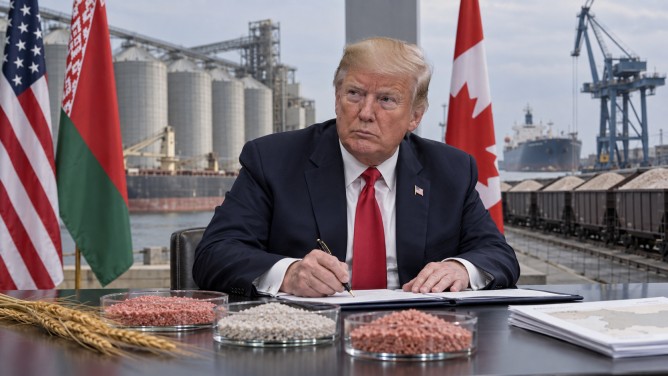
Amidst rising tensions between the United States and Canada over trade issues, the U.S. government is exploring new avenues to diversify its supply chain for agricultural resources. President Donald Trump has announced that Washington is negotiating a significant deal to purchase potash fertilizer from Belarus. This potential agreement could help reduce America’s reliance on Canadian potash, which has traditionally been a major import source for the U.S.
The proposed deal with Belarus could offer American farmers and ranchers potash at more competitive prices compared to current Canadian supplies. Potash is a crucial component in fertilizer production, and securing it at a lower cost would be beneficial for the U.S. agricultural sector. The shift in sourcing comes as part of the Trump administration’s broader strategy to exert trade pressure on Canada and potentially strengthen ties with other countries.
Currently, the U.S. imports a significant portion of its potash from Canada, with Russia and Belarus also contributing to the supply. The initiative to forge a deal with Belarus follows recent diplomatic gestures from Washington, which include easing certain sanctions on the Eastern European nation after it released political prisoners. Despite these moves, Belarus remains under scrutiny for its human rights record, particularly under President Alexander Lukashenko’s administration.
Belarus’s geopolitical position also plays a role in the potential deal’s implications. As a close ally of Russia, Belarus has faced Western sanctions due to its support for Russia during the conflict in Ukraine. Any large-scale agreement between the U.S. and Belarus could therefore carry broader diplomatic consequences beyond economic considerations.
The discussions with Belarus highlight the Trump administration’s efforts to navigate complex international relationships while addressing domestic economic needs. As the situation unfolds, the proposed potash deal may not only influence fertilizer prices and agricultural costs but also impact U.S. foreign policy dynamics in the region.