
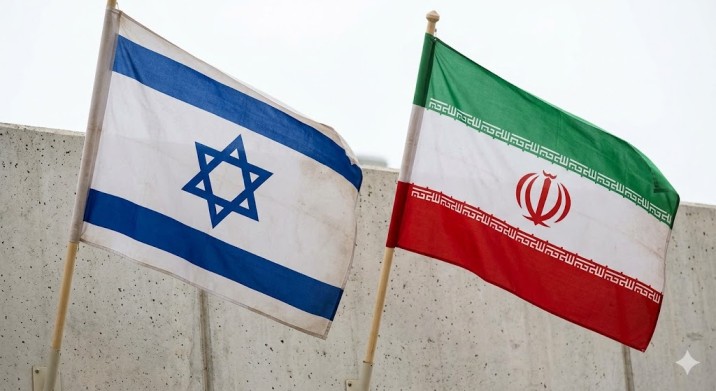
On Monday, Israel and Iran found themselves in a direct military confrontation, exchanging strikes that threaten to dismantle a fragile ceasefire established on April 8. This exchange has sparked fears of a broader conflict engulfing the Middle East, with both nations targeting each other in a new escalation of hostilities.
The confrontation began when Iranian missiles were launched toward northern Israel, prompting the Israeli military to respond with airstrikes on multiple Iranian locations. These strikes represent the first direct military engagement between the two countries since the ceasefire was agreed upon. Iranian officials reported explosions in cities such as Tehran, Isfahan, Karaj, and Tabriz, while Israeli forces claimed to have aimed at military infrastructure and air defense systems, including a petrochemical site in Iran.
The Islamic Revolutionary Guard Corps of Iran announced that its missile attacks targeted two military bases in Israel under the banner of “Operation Nasr” or “Victory.” Israel successfully intercepted several of these incoming missiles, though explosions were still reported in and around Jerusalem. The attacks caused damage to homes in a West Bank settlement, but fortunately, no injuries were reported.
This latest spike in hostilities comes amid rising tensions over attempts to reach a broader peace agreement. Iranian officials have accused the United States of either being aware of or supporting Israel’s military actions, cautioning that such aggression could adversely affect ongoing diplomatic discussions. In a related development, Yemen’s Houthi movement declared a missile attack on Israel and imposed a ban on Israeli-linked shipping in the Red Sea, raising alarms over potential disruptions to this vital maritime trade route.
The conflict’s escalation has also reverberated in global markets, with Brent crude oil prices climbing by $3.50 to reach $96.59 per barrel. Stock markets across Asia have experienced declines amid concerns about possible disruptions to energy supplies and the region’s stability, further illustrating the far-reaching implications of the conflict.