
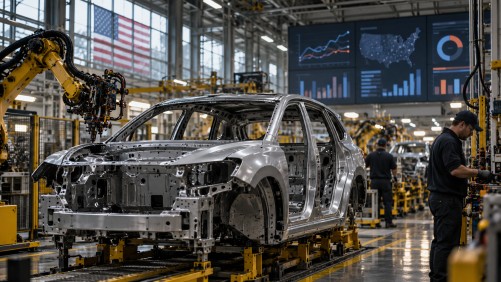
Uncertainty in the United States’ electric vehicle (EV) policies is posing significant challenges for automakers, impacting their investment decisions, production strategies, and overall competitiveness in the global automotive industry. This concern arises amid the U.S. government’s imposition of tariffs exceeding 100 percent on Chinese electric vehicles and its restrictions on automotive software and hardware linked to China, citing trade and data security issues.
Industry analysts argue that protectionist measures alone are insufficient to bolster domestic manufacturers without a clear, long-term industrial strategy. The fluctuating government incentives and changes in fuel economy standards, particularly during President Donald Trump’s administration, have only added to the uncertainty, causing some U.S. companies to scale back expansion plans or reevaluate production targets for new EV platforms.
Chinese manufacturers are also wary of entering the U.S. market due to these policy uncertainties. For instance, BYD has stated that it has no current plans to sell passenger vehicles in the U.S. under the existing conditions. Despite these challenges, the U.S. market remains potentially attractive for affordable electric vehicles, given Chinese manufacturers’ advancements in battery technology and cost-efficient production, which could pave the way for future trade negotiations with China.
While President Trump has suggested that Chinese automakers could manufacture vehicles in the U.S. by establishing factories and creating local jobs, several American automotive industry groups have urged the continuation of restrictions on Chinese manufacturers. Nevertheless, selective cooperation is already underway, exemplified by Ford’s partnership with Chinese battery manufacturer CATL to develop a battery facility in Michigan.
Analysts suggest that while broad restrictions on Chinese automakers are likely to persist, selective partnerships focusing on battery technology and manufacturing may continue where mutual commercial benefits exist. This dual approach highlights the complex interplay between protectionism and strategic collaboration within the evolving landscape of the global automotive industry.